The UN Common System includes a network of agencies, funds, and programmes operating under a unified employment framework, designed to streamline standards and benefits for staff. This system supports global priorities across sectors like health, education, economic development, food security, peacebuilding, and environmental protection. For a deeper look at each organization and how they operate within the UN common system mission, see A Complete Guide to the UN System.
Roles within the UN System
The UN is a global organization with numerous agencies, programmes, and funds focused on diverse areas such as public health, human rights, education, climate change, and sustainable development. The complexity of these issues demands a wide range of expertise and skills across various job categories. Here's a closer look at the major professional roles and job categories within the UN system:
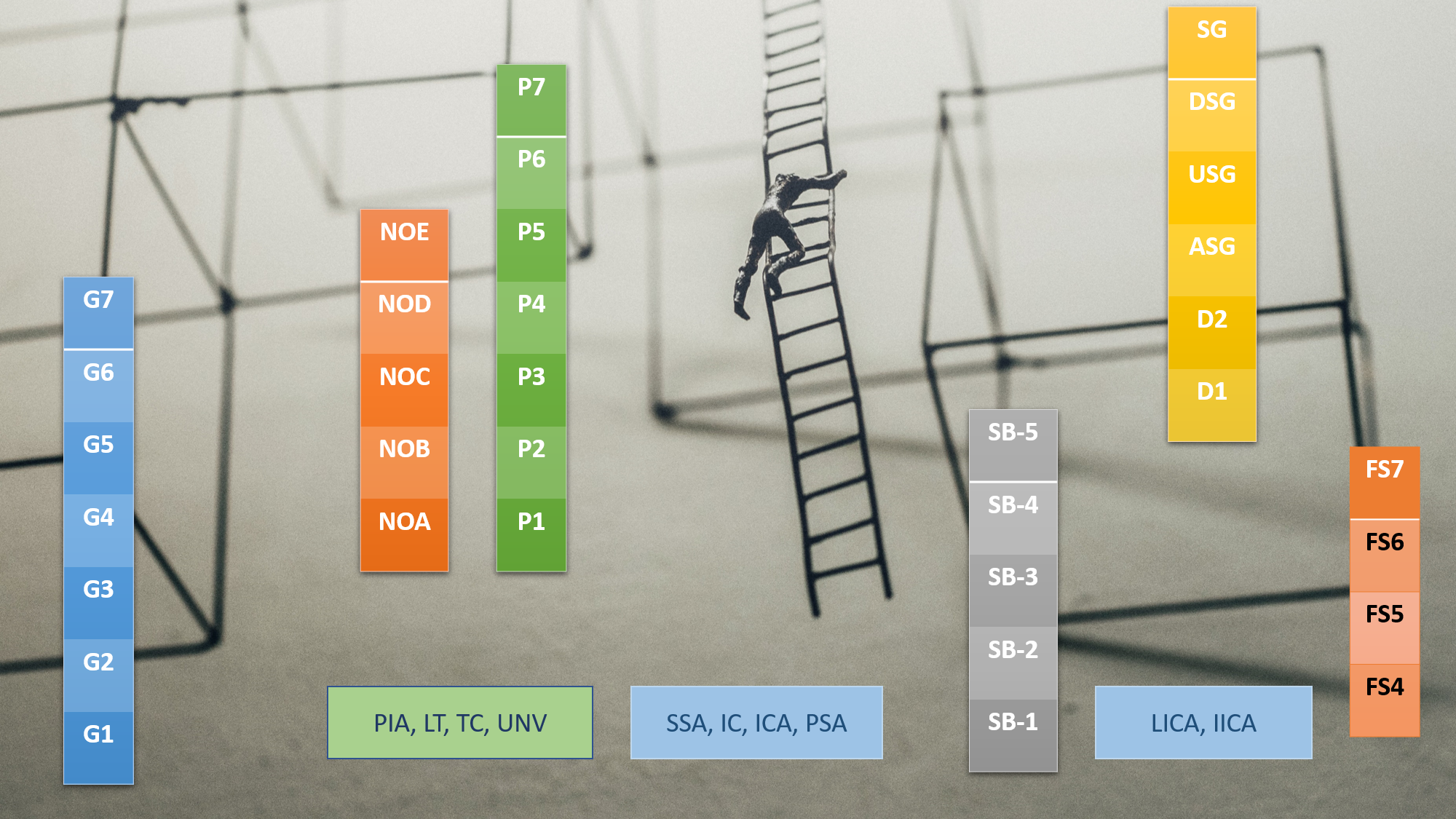
Professional and Higher Categories (P and D Levels)
In the the Professional and Higher categories within UN organizations, staff members typically hold advanced university degrees (master's or equivalent). However, candidates with a first-level university degree (bachelor's) may also qualify if they have substantial and relevant professional experience. Staff in these categories are normally internationally recruited and are expected to serve at different duty stations throughout their career with the UN organizations. Within these categories:
Entry-Level Professional Roles (P1-P2 Levels): Entry-level positions are often the starting points for professionals beginning careers in the UN system. These roles are normally designed for candidates with advanced degrees and limited experience (typically 1-3 years). Entry-level professionals support specific projects or initiatives under close supervision, performing research, analysis, and coordination tasks that contribute to the organization's mission.
Mid-Level Professional Roles (P3-P4 Levels): These mid-level positions require more extensive experience, generally between 3-7 years. Professionals at this level take on increased responsibility, often managing teams, overseeing project implementation, and making strategic recommendations. Mid-level roles demand a high degree of independence and expertise in specialized fields, and they typically involve more complex coordination tasks.
- Senior-Level Professional Roles (P4-P5 Levels): Senior roles at the P5 level (and certain P4 roles) are intended for highly experienced professionals with deep expertise, generally requiring at least 7-10 years of experience. These positions involve significant responsibilities in setting strategic priorities, leading large teams, and working closely with governments, partner organizations, and high-level stakeholders. Senior professionals play a critical role in shaping and guiding initiatives in the UN system organizations.
Senior Experts and Advisors (P6-P7 Levels): Senior experts and advisors at the P6 and P7 levels typically bring over 10-15 years of specialized analytical experience to UN organizations, contributing high-level expertise distinct from managerial or director roles. Positions at these levels, such as Chief Technical Advisors, focus on advanced technical guidance and in-depth subject matter expertise. While many UN organizations categorize similar roles at the D1 and D2 levels, some agencies distinguish expert positions by using the P6 and P7 designations to highlight their technical and advisory focus.
Advertisement
Executive-Level Director Roles (D1-D2 Levels): Director roles at the D1-D2 levels are executive positions intended for senior professionals with extensive expertise (usually over 10-15 years) in their fields. Directors hold top-tier responsibilities in setting strategic priorities, managing large and diverse teams, coordinating inter-agency efforts, and representing the organization at the highest levels. Their work is integral to the organization's mission and involves significant decision-making power and leadership responsibilities. Positions may include Executive Directors, Resident Coordinators, Country Directors, Regional Directors, Chief Technical Advisors, and Chief of Mission. These roles require exceptional leadership and are often key decision-makers within their specialized areas.
Senior Appointments
Senior appointments include high-level executive roles, encompassing positions that require extensive experience in leadership, management, and strategic decision-making. These roles are typically held by individuals with decades of experience in international development, diplomacy, policy-making, and organizational leadership.
At the highest levels, these leaders are typically appointed by the legislative bodies of their respective organizations, underscoring the level of trust and responsibility associated with these positions. Notable roles in this category include Secretary-General, Director-General, Executive Director, High Commissioner, and President - depending on the Organization.
Head of the Organization:
- UN Secretariat - Secretary-General
- International Telecommunication Union (ITU) - Secretary-General
- World Meteorological Organization (WMO) - Secretary-General
- UN Conference on Trade and Development (UNCTAD) - Secretary-General
- International Civil Aviation Organization (ICAO) - Secretary-General
- UN Children's Fund (UNICEF) - Executive Director
- UN Development Programme (UNDP) - Administrator
- World Food Programme (WFP) - Executive Director
- UN Environment Programme (UNEP) - Executive Director
- UN Office on Drugs and Crime (UNODC) - Executive Director
- UN Population Fund (UNFPA) - Executive Director
- UN Human Settlements Programme (UN-Habitat) - Executive Director
- UN Office for Project Services (UNOPS) - Executive Director
- UN Institute for Training and Research (UNITAR) - Executive Director
- International Finance Corporation (IFC) - Executive Director
- UN Framework Convention on Climate Change (UNFCCC) - Executive Secretary
- World Health Organization (WHO) - Director-General
- International Labour Organization (ILO) - Director-General
- UN Educational, Scientific and Cultural Organization (UNESCO) - Director-General
- Food and Agriculture Organization (FAO) - Director-General
- UN Industrial Development Organization (UNIDO) - Director-General
- Universal Postal Union (UPU) - Director-General
- International Atomic Energy Agency (IAEA) - Director General
- UN High Commissioner for Refugees (UNHCR) - High Commissioner
- UN Relief and Works Agency for Palestine Refugees in the Near East (UNRWA) - Commissioner-General
- International Fund for Agricultural Development (IFAD) - President
- World Bank - President
- International Monetary Fund (IMF) - Managing Director
In the Senior Appointments categories, there are also roles such as Under-Secretary-General (USG), Assistant Secretary-General (ASG), and Chief of Mission. They are normally appointed by the Head of the Organization, with some appointments made in consultation with Member States or requiring the approval of the General Assembly.
Field Service (FS)
Field Service (FS) positions are for professionals working on the ground, often in challenging or high-risk areas that require direct involvement in peacekeeping, humanitarian aid, and emergency response. These roles include both civilian and military functions, with professionals working in conflict zones, post-disaster regions, or fragile states.
Field Service roles often require deployment to areas experiencing crises, including armed conflicts, natural disasters, and humanitarian emergencies. Examples include Peacekeepers, Field Officers, Humanitarian Logistics Coordinators, and Security Specialists who support UN operations by coordinating relief efforts, supporting peacekeeping missions, and ensuring the safety of staff and resources in volatile regions.
General Service (GS)
The General Service (GS) category provides essential administrative and operational support necessary to sustain UN organizations worldwide. These roles are crucial in maintaining the organization's day-to-day operations, encompassing a wide range of duties based on experience level. GS staff are typically recruited from the country or region where the position is located. They can be of any nationality, but must be legally permitted to work in the country.
- General Support Roles (G1 to G5 levels): General support roles are the foundation of support within the UN system, handling essential administrative and operational tasks across various departments. These positions often require strong organizational skills, attention to detail, and proficiency in core UN systems and procedures. Examples include positions like Administrative Assistants, IT Support Technicians, and Finance Clerks, who ensure records are well-maintained, support recruitment processes, and coordinate basic logistics, all of which are essential to the UN organization's mission.
- Associate and Senior Associate Roles (G6-G7 Levels): At the G6 and G7 levels, associate and senior associate positions bring greater responsibility, often considered as "para-professionals". The G7 level, in particular, represents the highest grade within the General Service category and demands skills and many years of practical experience, providing critical support to operations of the UN organizations. G6-G7 positions offer a robust platform for career growth, often serving as a bridge to professional roles or higher administrative responsibilities within the UN. Examples include Finance Associates, HR Associates, and Programme Support Associates.
National Professional Officers (NPO)
National Professional Officers (NPO) play an essential role in connecting the Organization's initiatives to the unique cultural, social, and political contexts of their home countries. These professionals are hired locally to work within their own countries, utilizing their deep understanding of regional issues to enhance UN efforts.
NPOs strengthen the UN's connection with local communities, facilitate effective programme implementation, and contribute to sustainable development at the national level. Positions include roles like Local Programme Manager, Policy Officer, and Community Outreach Coordinator.
NPO positions are classified into five levels, from A to E, with each level corresponding to increased responsibility and required experience:
- Level A / NOA: Requires a minimum of 1 to 2 years of experience.
- Level B / NOB: Requires a minimum of 2 to 3 years of experience.
- Level C / NOC: Requires at least 5 years of experience.
- Level D / NOD: Requires at least 7 years of experience.
- Level E / NOE: Requires over 7 years of experience.
Other Job Categories
- Internships: Internships offer valuable exposure and experience. The World Bank, WHO, UN agencies, and international NGOs provide internships that are ideal for students and young professionals.
- Young Professionals Programmes (YPP): Organizations like the UN and World Bank have established YPPs to recruit young talent from around the world. These programmes are rigorous but offer entry-level positions with the potential for growth within the organization.
Young Professionals Programme (YPP) at the United Nations
- Junior Professional Officer (JPO) Programmes: Funded by member states, JPO programmes offer young professionals a unique opportunity to gain experience in the UN system. JPOs work in various areas and are typically recruited for two years, often leading to longer-term positions within the UN.
- Consultancies and Short-Term Contractors: Many organizations, including UN agencies and the World Bank, hire consultants for specific projects. These short-term contracts offer relevant experience and can lead to longer-term opportunities.
- Volunteers: Volunteer programme such as UN Volunteers (UNV) allows people to gain hands-on experience in the field, supporting humanitarian and development projects. Positions are available across various countries, offering a direct way to contribute to UN missions and initiatives.
- Rosters and Talent Pools: Organizations sometimes advertise for rosters or talent pools, creating lists of pre-vetted candidates for future positions. These can be excellent opportunities to be considered for roles without needing to reapply each time a position opens.
- Fellowships and Scholarships: Various UN agencies and international organizations offer fellowships and scholarships for specialized training and research. These opportunities are designed for individuals seeking advanced skills and academic or professional development in areas critical to the organization's mission. They may include placements, mentorship, and networking opportunities that can open doors to long-term careers.
Educational and Networking Opportunities
For those aspiring to build a career within the UN system and international organizations, pursuing an advanced degree in relevant disciplines such as international relations, public health, law, or development studies is highly advantageous. Some of the positions required a completion of an advanced degree.
Numerous universities worldwide offer specialized programmes that align with UN objectives, fostering academic and practical skills through research opportunities, internships, and extensive networking.
In addition, engaging with UN-affiliated events, seminars, and conferences not only enhances knowledge but also provides valuable networking opportunities with professionals already working within the UN system.
"The United Nations is not an end in itself; it is a means to achieve a better world for everyone. It is a collective effort, where each of us plays a crucial role in building the future we want."
- António Guterres, UN Secretary-General
A career with the UN Common System, World Bank, or other major international organizations is both challenging and rewarding. Professionals in these fields tackle the world's most pressing issues, from poverty and climate change to global health and human rights, driving sustainable change at a global level. Working in this space is not just a career - it's a chance to be part of a larger mission that transcends borders, uniting people for a common purpose.
Whether you're drawn to peacekeeping, economic policy, or environmental sustainability, these organizations provide great opportunities to make a meaningful difference. With a commitment to continuous learning, cross-cultural collaboration, and dedication to global causes, you can build a fulfilling career with an international impact.