The United Nations is not one organization. It is a system — a sprawling constellation of agencies, funds, programmes, and entities, each with its own mandate, culture, and recruitment process. Before you apply for anything, the most valuable thing you can do is understand the terrain.
Step 1: Know the UN Landscape
The UN system is made up of several distinct families of organizations:
- The UN Secretariat — the executive arm, led by the Secretary-General, responsible for peacekeeping, political affairs, legal matters, and administration.
- Specialised Agencies — legally independent organisations with their own governing bodies, budgets, and career portals: WHO (health), ILO (labour), FAO (food and agriculture), UNESCO (education and culture), ICAO (aviation), IMF and World Bank (finance), and others.
- Funds and Programmes — UNICEF, UNDP, WFP, UNHCR, UN Women, and UNFPA. These are funded primarily through voluntary contributions and tend to have a strong operational and field presence.
- Research and Training — bodies like UNITAR, UNU, and UNIDIR, which focus on learning, policy research, and knowledge development.
Each organization operates independently. UNDP is not UNICEF. WHO is not the UN Secretariat. Their mandates differ, their cultures differ, and their recruitment processes differ. Take the time to understand which organizations align with your expertise and values. Our Complete Guide to the UN System is a good place to start.
Step 2: Build the Right Qualifications and Experience
The UN has clear and consistently applied minimum requirements. Getting these right saves you the frustration of applying to roles you will be screened out of before anyone reads your application.
Education
Most professional posts (P grades) require a master's degree or equivalent in a relevant field — international relations, law, public health, economics, finance, communications, humanitarian affairs, or similar. Some technical roles accept a bachelor's degree with additional years of experience. A growing number of operational agencies also value vocational or professional qualifications in engineering, logistics, IT security, and related fields.
Work Experience
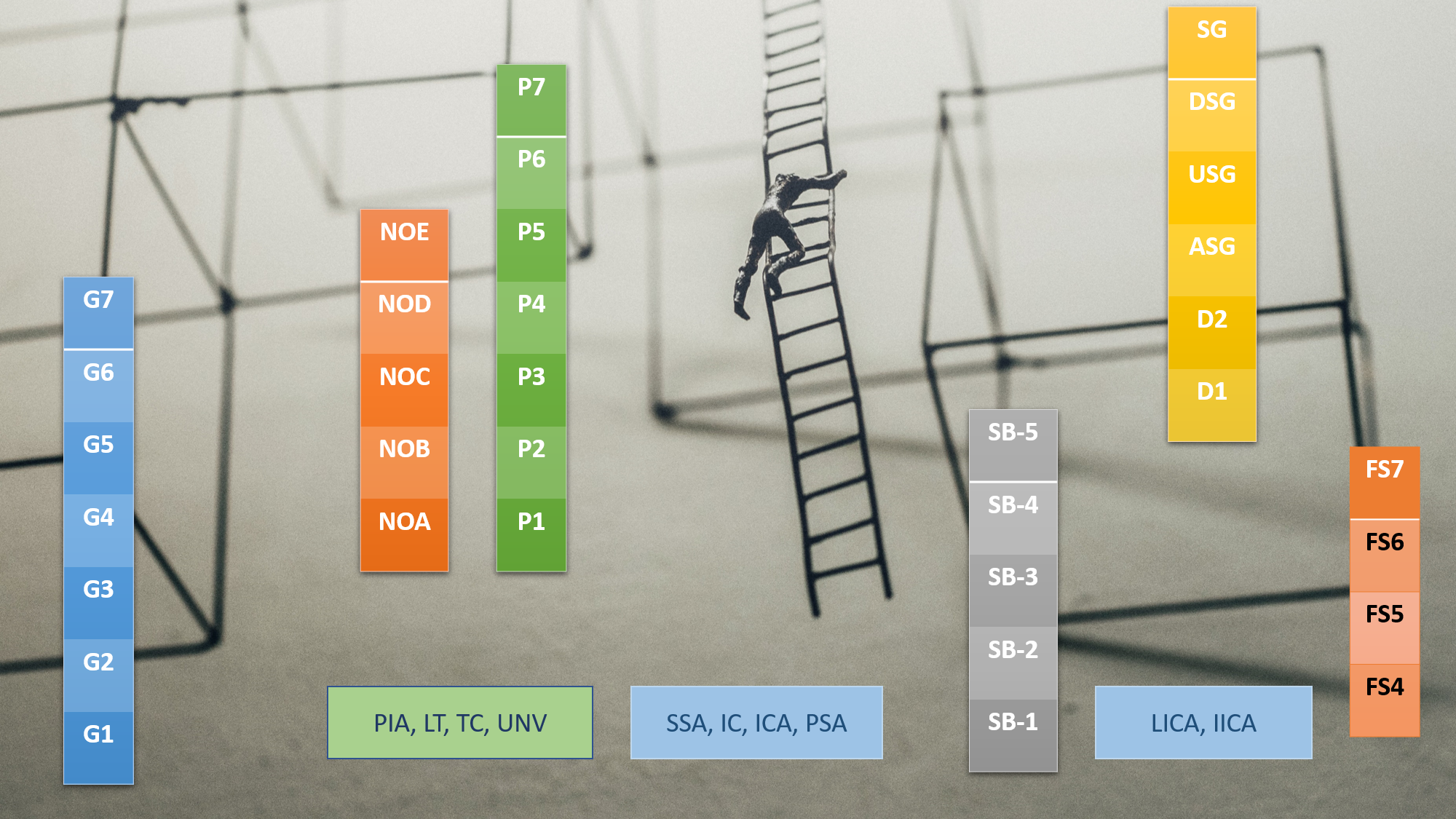
Beyond the degree, each grade level requires a minimum number of years of progressively responsible professional experience. The key word is progressively — the UN is not simply counting years, it is looking for a career trajectory that shows growth in scope and responsibility. Field experience, particularly in hardship or non-family duty stations, is a genuine differentiator for operational agencies.
Languages
English and French are the two primary working languages of the UN system. Most posts require fluency in at least one of the two. Proficiency in a second official language — Spanish, Arabic, Russian, or Chinese — is an asset for many posts and a requirement for some. Do not claim a language level you cannot demonstrate; assessments are common.
The International Civil Service Commission (ICSC) sets the standards for grades, salaries, and conditions of service across the common system. Their website is a useful reference for understanding what each professional level entails.
Step 3: Use Entry-Level Pathways Strategically
If you are early in your career, the UN offers several structured routes in. None of them are easy, but all of them are real.
Internships
Most UN agencies offer internship programmes. They are competitive, often unpaid (though some agencies now provide stipends), and typically require enrolment in or recent completion of a graduate programme. Despite the limitations, internships are one of the clearest pathways to understanding how the UN works from the inside — and to making yourself known to the people who hire.
UN Volunteers (UNV)
The UN Volunteers programme deploys professionals on national and international assignments, typically with a modest living stipend. It is a serious career step, not a gap-year option. Former UNVs are consistently among the stronger candidates for fixed-term posts — partly because of the experience, and partly because they have already demonstrated a commitment to the system.
Young Professionals Programme (YPP)
The YPP — formerly the National Competitive Recruitment Examination (NCRE) — is the UN Secretariat's main entry route for P-1 and P-2 posts. It targets candidates under 32 years old from underrepresented member states, through a rigorous written examination. If your country is on the underrepresented list and you meet the criteria, this is one of the most direct paths in. Check the UN Careers portal for the current examination schedule and eligible countries.
JPO Programme
Many member states sponsor Junior Professional Officers (JPOs) — nationals funded for one to two years with a specific UN agency. Check your country's foreign ministry or development agency for current sponsorship opportunities. JPO assignments frequently convert to longer-term positions.
Step 4: Write an Application That Speaks the UN's Language
Most UN applications are submitted through structured online systems — Inspira for the Secretariat, or equivalent systems for other agencies. You are not uploading a CV; you are filling out a profile, section by section. This matters because the same information, worded differently, can land you on the shortlist or eliminate you early.
Read the Vacancy Notice — All of It
The duties and responsibilities section is not just a job description. It is a preview of the competencies the panel will probe in your interview. The competencies listed in the vacancy are not decoration — they are the scoring criteria. Read them carefully and think through specific examples from your own work for each one before you even start writing your application.
Work Experience: Write for Impact
Describe each role in terms of what you achieved, not just what you were responsible for. "Managed a team" tells a reader almost nothing. "Led a team of eight across three country offices to deliver a $4.5M emergency response programme within a nine-week timeline" tells them something concrete. Quantify wherever you genuinely can.
The Cover Note
When a cover note is invited, treat it as a serious piece of writing — not a summary of your CV. Answer three questions: Why this role? Why this organisation? And why you, specifically, with your particular background and experience? One page is enough. Concrete is better than enthusiastic.
Match the Language
Automated screening and human reviewers both respond to relevance. If the vacancy uses the phrase "results-based management" and you have that experience, use those words explicitly. If "multi-stakeholder coordination" is listed as a duty and you have done it, say so in those terms. This is not gaming the system — it is communicating clearly.
Step 5: Prepare Seriously for the Competency-Based Interview
UN interviews are almost universally competency-based. The panel will ask you to describe specific past situations that demonstrate defined competencies — communication, teamwork, planning and organising, accountability, client orientation, and others depending on the role and level. They score your answers against predefined behavioural indicators.
The standard framework for answering is the STAR method: Situation (the context), Task (your specific responsibility), Action (what you did — in detail, using "I" not "we"), and Result (what happened, ideally with a measurable outcome).
Prepare 8–10 strong, specific stories from your career before the interview. Each one should be a real incident where something was genuinely at stake and where your individual actions made a difference. Practice saying them aloud until they flow naturally — not as a rehearsed script, but as a story you know well.
Many UN interviews are conducted by video. Test your technology. Look at the camera. Ensure your background is clean and your sound is clear.
Step 6: Use Your Network — Wisely
UN hiring is merit-based. Having a contact inside an organisation will not get you a job. But understanding how an organisation actually works — its culture, its current priorities, the unwritten norms — is genuinely useful for writing a better application and performing better in an interview.
If you have access to people who work or have worked in UN organisations, a brief, respectful request for an informational conversation is entirely appropriate. Ask about the culture, what the role actually involves day-to-day, and what distinguishes strong from average candidates. Then listen carefully.
LinkedIn is useful for identifying professional connections. UN associations in your country may also host events that bring together current and former international civil servants.
Step 7: Be Patient — and Keep Going
Most people who end up working for the United Nations applied multiple times, to multiple organisations, across multiple years. That is not a discouraging fact — it is a realistic one that removes the sting of any single rejection.
The hiring timeline is long. From application deadline to job offer, four to six months is common; twelve months or more is not unusual for Secretariat posts. Keep your search active while any one process is underway. Set up job alerts on the relevant portals. Continue developing your skills. And treat each application cycle as useful practice, because it is.
The people who build careers in the UN system are not always the most credentialed or the most connected. They are almost always the ones who prepared most thoroughly and persisted most steadily. The work, when you get there, is worth it.